

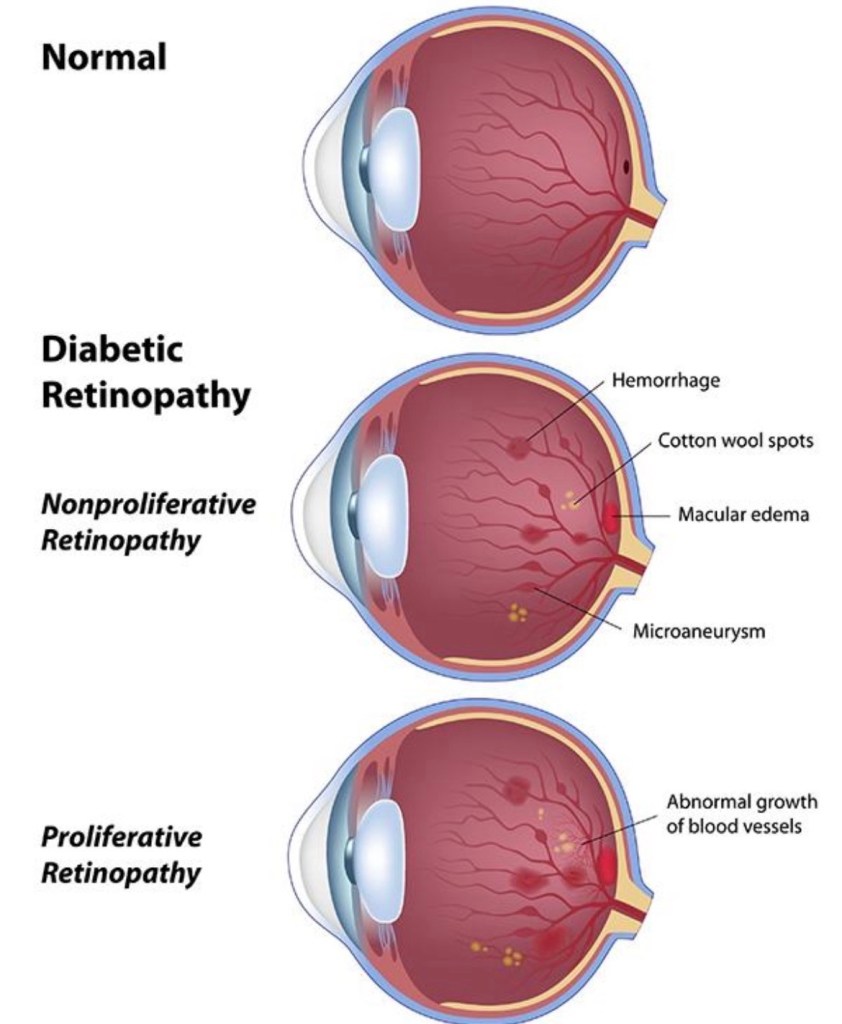
Diabetic Retinopathy is a serious eye condition caused by diabetes that affects the retina, the light-sensitive part of the eye. It is one of the leading causes of vision loss and blindness, especially among adults. The condition develops gradually and may not show symptoms in its early stages, making regular eye check-ups very important.
What Causes Diabetic Retinopathy?
Diabetic retinopathy occurs when high blood sugar levels damage the tiny blood vessels in the retina. Over time, these blood vessels may:
• Leak fluid or blood
• Become blocked
• Grow abnormally (new fragile vessels)
These changes interfere with the retina’s ability to function properly, leading to vision problems.
Stages of Diabetic Retinopathy
1. Mild Non-Proliferative Stage
• Small swelling in retinal blood vessels (microaneurysms)
• Usually no noticeable symptoms
2. Moderate Non-Proliferative Stage
• Blood vessels begin to block
• Reduced blood supply to the retina
3. Severe Non-Proliferative Stage
• Many blood vessels are blocked
• Signals the body to grow new abnormal vessels
4. Proliferative Diabetic Retinopathy
• Growth of fragile new blood vessels
• High risk of bleeding, retinal detachment, and severe vision loss
Symptoms
In early stages, there may be no symptoms. As the disease progresses, signs may include:
• Blurred or fluctuating vision
• Dark spots or floaters
• Difficulty seeing at night
• Vision loss in advanced stages
Risk Factors
• Long duration of diabetes
• Poor blood sugar control
• High blood pressure
• High cholesterol
• Pregnancy (in diabetic women)
Diagnosis
Diabetic retinopathy is detected through:
• Dilated eye examination
• Retinal imaging (fundus photography)
• Optical coherence tomography (OCT)
Treatment
1. Blood Sugar Control
• The most important step in preventing and slowing progression
2. Laser Treatment
• Seals leaking blood vessels
• Prevents further damage
3. Injections (Anti-VEGF Therapy)
• Reduces abnormal blood vessel growth
4. Surgery (Vitrectomy)
• Used in advanced cases to remove blood from the eye
Prevention
• Maintain good blood sugar control
• Monitor blood pressure and cholesterol
• Have regular eye examinations
• Follow medical advice and treatment plans
Diabetic retinopathy is a serious but largely preventable cause of blindness. Early detection, proper management of diabetes, and timely treatment can help preserve vision and improve quality of life.
Raising awareness about this condition is essential, especially in communities with a high number of people living with diabetes.


Leave a Reply