

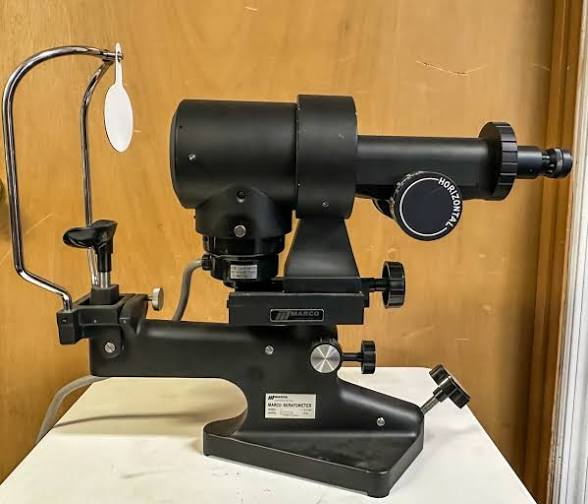
A keratometer (also called an ophthalmometer) is an instrument used to measure the curvature of the cornea, which is the clear, dome-shaped front surface of the eye.
It works by projecting light onto the cornea and analyzing the reflection (called mires) to determine how steep or flat the corneal surface is. The patient places their chin on a rest while the examiner aligns the instrument for accurate measurement.
Uses
1. Measuring Corneal Curvature
• Determines the shape and steepness of the cornea
• Essential for understanding how light is focused in the eye
2. Detecting Astigmatism
• Identifies irregular curvature of the cornea
• Helps diagnose and measure the degree of astigmatism
3. Contact Lens Fitting
• Ensures proper fitting of contact lenses
• Prevents discomfort and improves vision quality
4. Pre-Surgical Assessment
• Used before procedures like refractive surgery or cataract surgery
• Helps in selecting appropriate lens power
5. Monitoring Corneal Conditions
• Tracks changes in corneal shape over time
• Useful in conditions like keratoconus
Advantages
• Quick and non-invasive
• Provides accurate corneal measurements
• Essential in both diagnosis and treatment planning
The keratometer is a vital ophthalmic instrument that plays a key role in diagnosing refractive errors, fitting contact lenses, and planning eye surgeries. Its ability to measure corneal curvature makes it indispensable in modern eye care.


Leave a Reply