

Blindness is often surrounded by many false beliefs and misconceptions that affect how people with visual impairment are treated in society. These myths can lead to discrimination, stigma, and misunderstanding. It is important to correct these ideas in order to promote inclusion, respect, and equal opportunities for blind individuals.
Myth 1: All blind people see nothing at all
Reality:
Blindness is a spectrum. Some people have partial vision or low vision, while others have total blindness. Many can still perceive light, shapes, or movement.
Myth 2: Blind people cannot live independently
Reality:
With training and assistive tools like white canes, guide techniques, and screen readers, many blind individuals live fully independent lives, attend school, work, and manage daily activities.
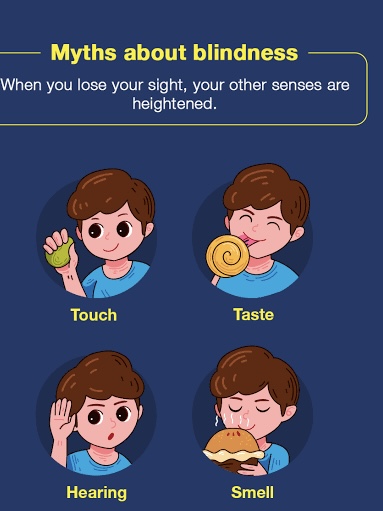
Myth 3: Blind people have “superhuman” hearing or touch
Reality:
Blind individuals do not have supernatural senses. Instead, they develop stronger listening and tactile skills through practice and adaptation, not because of biological enhancement.
Myth 4: Blindness means inability to learn or succeed
Reality:
Blindness does not affect intelligence. With proper educational support, blind individuals can achieve academic excellence and professional success in many fields.
Myth 5: Blind people are always helpless
Reality:
Blind individuals are capable of performing most daily tasks independently. They may only need assistive tools or guidance in unfamiliar environments.
Myth 6: Blindness is always hereditary
Reality:
While some cases are genetic, many causes of blindness include infections, injuries, malnutrition, diabetes, glaucoma, and preventable diseases.
Myth 7: Blind people cannot use technology
Reality:
Modern technology has greatly improved accessibility. Apps like screen readers, voice assistants, and navigation tools allow blind people to use smartphones, computers, and digital platforms effectively.
Myth 8: Blindness cannot be prevented or treated
Reality:
Many causes of blindness are preventable or treatable, especially when detected early (e.g., cataracts, infections, glaucoma, vitamin A deficiency).
Misconceptions about blindness create unnecessary barriers for visually impaired individuals. When society understands the truth, it promotes inclusion, dignity, and equal opportunity. Blind people are not limited by their condition, they are limited only by lack of access and support.


Leave a Reply