

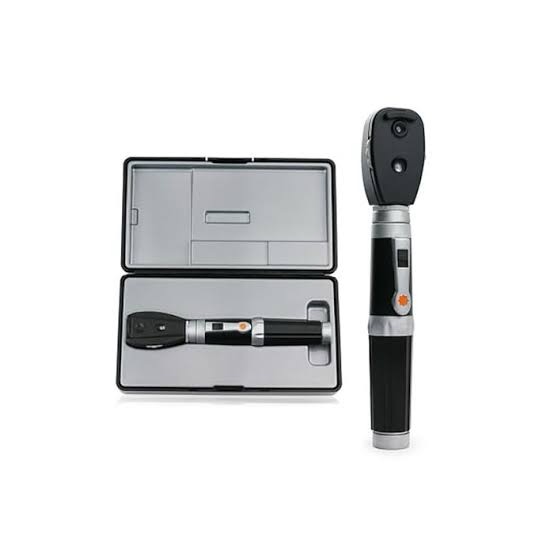
An ophthalmoscope is a handheld medical instrument used to examine the inside of the eye, especially the retina, optic nerve, and blood vessels.
It consists of a light source, a mirror or prism system, and lenses that allow the examiner to look through the pupil and see internal eye structures. During the examination, the room is usually dim to allow a clearer view, and the patient is asked to focus on a distant object.
There are two main types:
Direct ophthalmoscope: It gives an upright, highly magnified image
Indirect ophthalmoscope: It provides a wider field of view of the retina
Main Parts
Light source – illuminates the inside of the eye
Viewing aperture – where the examiner looks through
Lens disc – adjusts focus for clear viewing
Handle (battery-powered) – supplies power to the light
Structures It Examines:
Retina
Optic nerve (optic disc)
Retinal blood vessels
Macula (central vision area)
Uses
1. Detection of Eye Diseases
Identifies conditions such as glaucoma, retinal detachment, and macular degeneration
2. Diagnosis of Systemic Diseases
Helps detect signs of illnesses like hypertension and diabetes through changes in retinal blood vessels
3. Routine Eye Examination
Used in general check-ups to assess eye health
4. Monitoring Eye Conditions
Tracks progression of diseases affecting the retina and optic nerve
5. Emergency Eye Assessment
Useful in evaluating sudden vision loss or eye injuries
The ophthalmoscope is a simple yet powerful diagnostic tool that allows healthcare providers to look directly into the eye. It plays a vital role in the early detection of both eye and systemic diseases, helping to prevent vision loss and blindness


Leave a Reply