

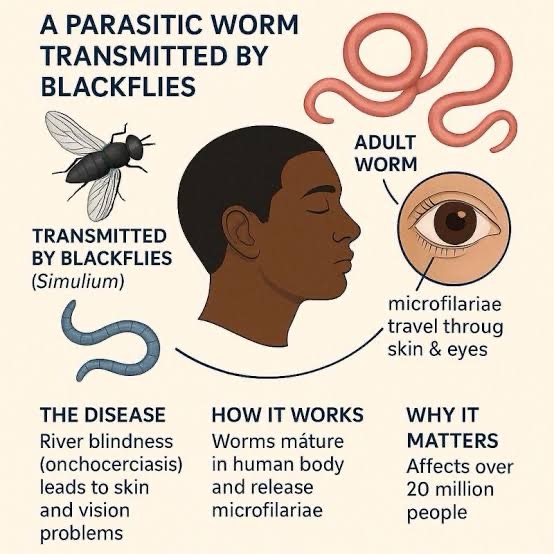
River blindness, medically known as Onchocerciasis, is a neglected tropical disease that affects millions of people, especially in parts of Sub-Saharan Africa. It is caused by a parasitic worm called Onchocerca volvulus and is transmitted through repeated bites from infected blackflies that breed near fast-flowing river, hence the name “river blindness.”
Cause and Transmission
The disease is spread by the bite of infected blackflies. When a blackfly bites a person, it can deposit immature worms into the skin. These worms grow into adults and produce thousands of microscopic larvae (microfilariae) that move through the skin and eyes. Over time, the presence and death of these larvae trigger inflammation that damages body tissues, including the eyes.
Signs and Symptoms
River blindness mainly affects the skin and eyes. Common symptoms include:
• Severe itching and skin rash
• Thickened or discolored skin
• Small lumps (nodules) under the skin
• Eye irritation and redness
• Blurred vision and sensitivity to light
Prevention and Control
The disease can be controlled and prevented through:
• Mass drug administration using Ivermectin, which kills the larvae and reduces transmission
• Vector control, such as reducing blackfly breeding sites
• Community health education to encourage participation in treatment programs
Regular treatment over time can significantly reduce infection and prevent blindness.
Treatment
There is no quick cure that removes adult worms immediately, but repeated doses of ivermectin help control the infection by killing the larvae. This reduces symptoms, prevents complications, and stops the spread of the disease within communities.
River blindness is a preventable and controllable disease, yet it remains a major public health concern in many regions. With continued use of effective treatments, improved sanitation, and community awareness, the burden of this disease can be greatly reduced, helping to protect vision and improve quality of life.


Leave a Reply